How Shopping at Chadstone Made Me Spiral: A UX Case Study
What a trip to Chadstone reveals about broken systems and human behaviour.
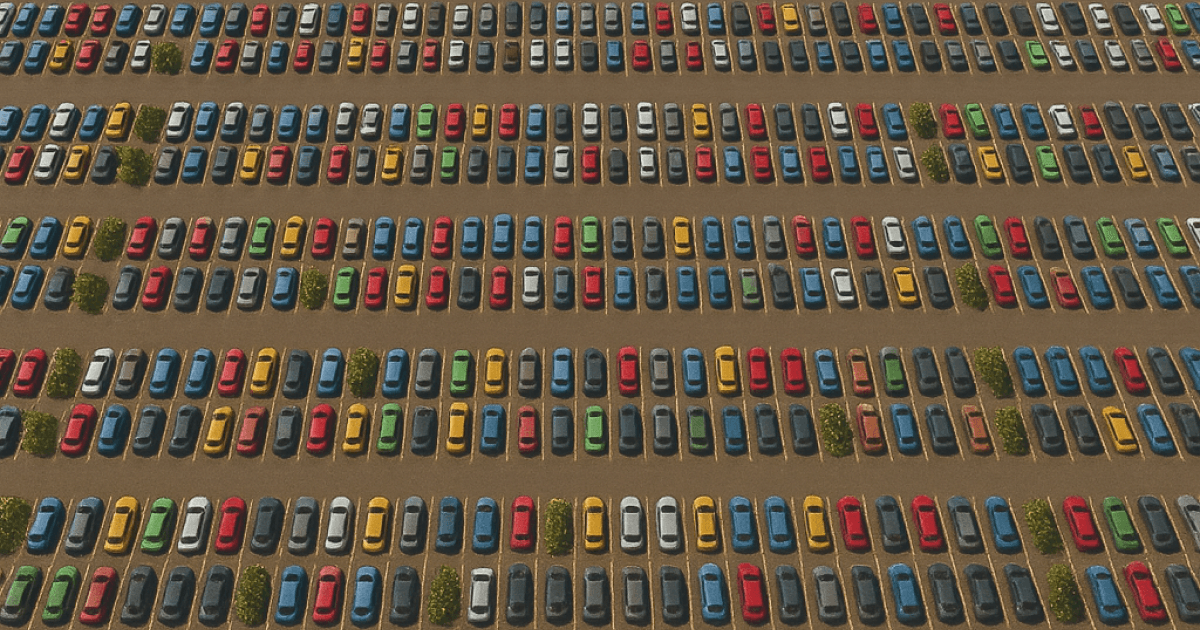

“Hey, I need a couple things from Chaddy… you wanna come with me?”
Few phrases send shivers down my spine like that one. And it’s not because I have a fear of designer handbags and sushi handrolls, no. It’s not what’s inside that scares me, it’s what happens before I’ve even had the chance of walking through the Chadstone Shopping Centre doors.
It’s the parking situation. An environment, I’ve learnt over the years, to try as best as I can to stay away from. It turns law abiding citizens into back-stabbing, knee-breaking a**holes.
But, every now and again, I end up driving down princess highway towards my worst nightmare. And last weekend, I once again had to face my fears.
I get to the mouth of the car park, the asphalt barely visible amongst the sea of cars scrambling in front of me. My heart-rate increases, and I swallow. “War” I think to myself. I exit the safety of the slip lane and enter the battlefield.
I can almost see the trailing blur as cars accelerate around corners of parking lanes until there’s a standstill or more accurately, a stand-off. Who got there first? The car in front was reversing when they saw someone leaving, but the car behind just had good luck… or good skill? Who knows? It actually doesn’t matter. Now we must all wait whilst they work it out or someone gives in, leaving the loser miserable, whilst the victor has not an ounce of guilt about the ensuing search that continues for their counterpart.
We all sit silently considering how these precious moments observing this battle are stopping us from potentially finding that one elusive spot.
I somehow ascend what feels like Jacob’s ladder to the top level of the carpark because I think it’s my best chance… “I’m a genius, no one else would have thought of this”. I was wrong. Everyone had. The level is all one way driving, making sure people go around in a single file line. Not today. I swerve out in front, trying to bypass my competition by going the wrong way down the lane and giving myself an advantage.
Once again, I was not the first to think of that. No luck.
I see someone coming back to their car! “Jackpot” I think to myself. I put my indicator on, the universal sign for ‘f*** off this is mine’. The person opens their car door, reaches in, pulls something out and heads back towards the shopping centre doors. My heart sinks, they just forgot something. How selfish. For now, my search continues.
I turn back around and see someone walking towards me. Now I have to do what I absolutely hate. I have to talk to a stranger and plead with them to kindly point me to the oasis they have been hoarding. I hesitate, and as I do someone cuts in front of me, and indicates. Opportunity gone.
I start to blame myself. “If only I was more of a prick!”, “why can’t I stand up for myself?”. I then watch as cars slowly move past the exit doors of the shopping centre and tailing shoppers back to their cars causing severe delays near the front. Like a cub learning from its mother hunting for food, there comes a time where I have to fend for myself.
I join the line and follow my suspect somewhat creepily back to their car.
Finally, I have my spot. But all I want to do is go home.
I’m cooked.
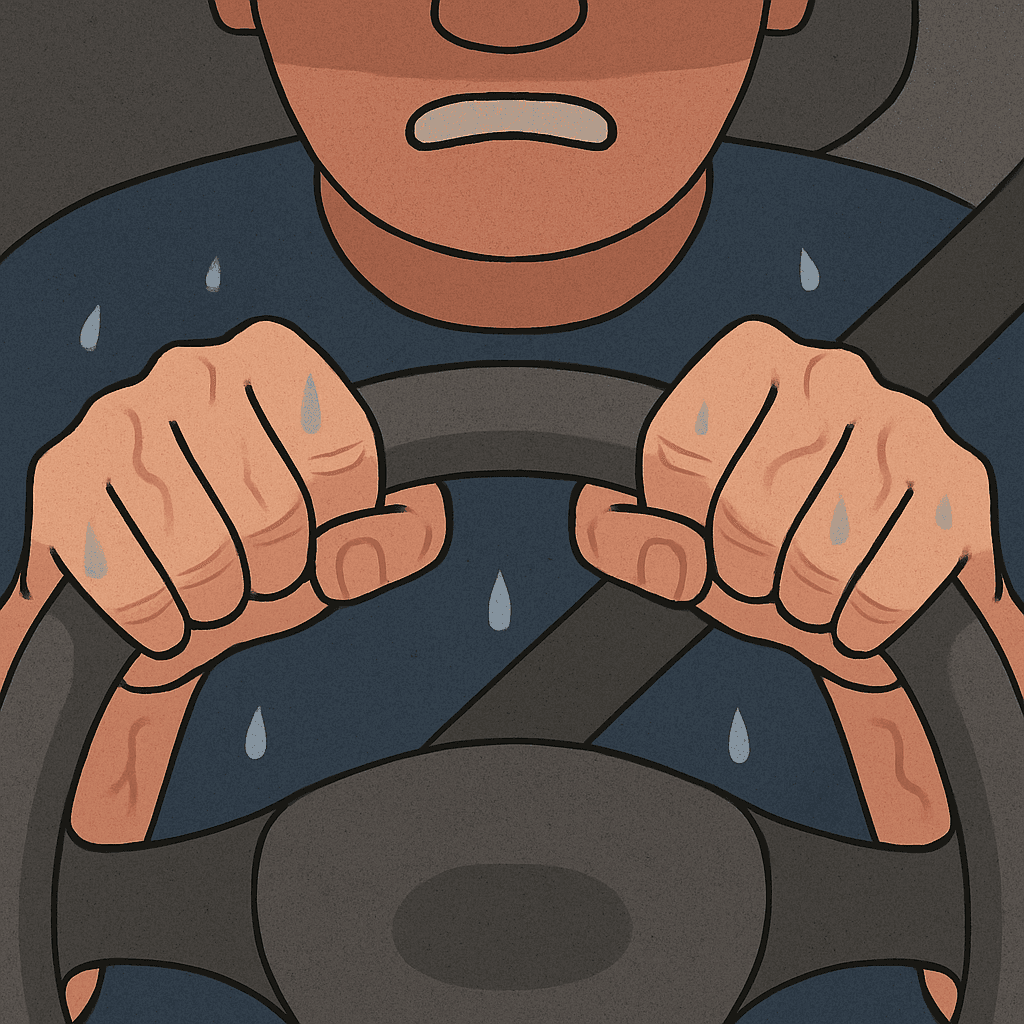
Is it me? Am I the problem?
So what’s the point of all this besides just a thrilling anecdote? Well once the self-blame subsided, and the sweat dried off my forehead, my UX Designer instincts took over.
What is it about this concrete maze that brings out the worst in us?
Where UX meets the parking lot.
Cognitive Load:
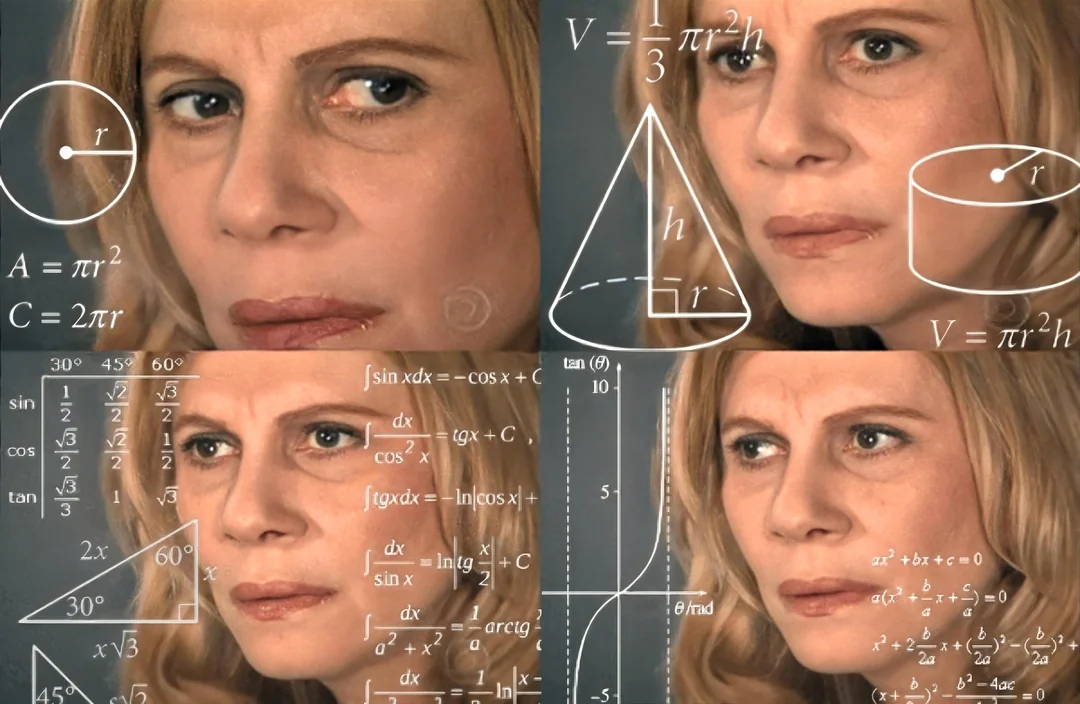
The amount of cars, the abrupt noises of squeaky wheels and passive-aggressive hoots mixed with the need for quick decisions lead to an overwhelming of our Cognitive Load. Nielsen Norman Group describes it as when an environment demands more mental processing than our brains can comfortably handle, we default to shortcuts, impulsive moves, and overall, it leads to some bad decisions. I can’t say I normally take the measure of driving the wrong way down a one-way… but here we are…
Scarcity Mindset:
It takes all of 0.2 seconds in the carpark to realise there aren’t many free spots going around. Behavioural economists, Sunstein and Thaler explain how limited supply narrows our attention, heightens urgency, and pushes us toward irrational, competitive behaviour. This can manifest in speeding up if you think you see someone getting into a parked car, cutting in front of oncoming traffic to get there first, or simply raising your voice at your partner if you think you see a free spot become available.
Desired Paths:
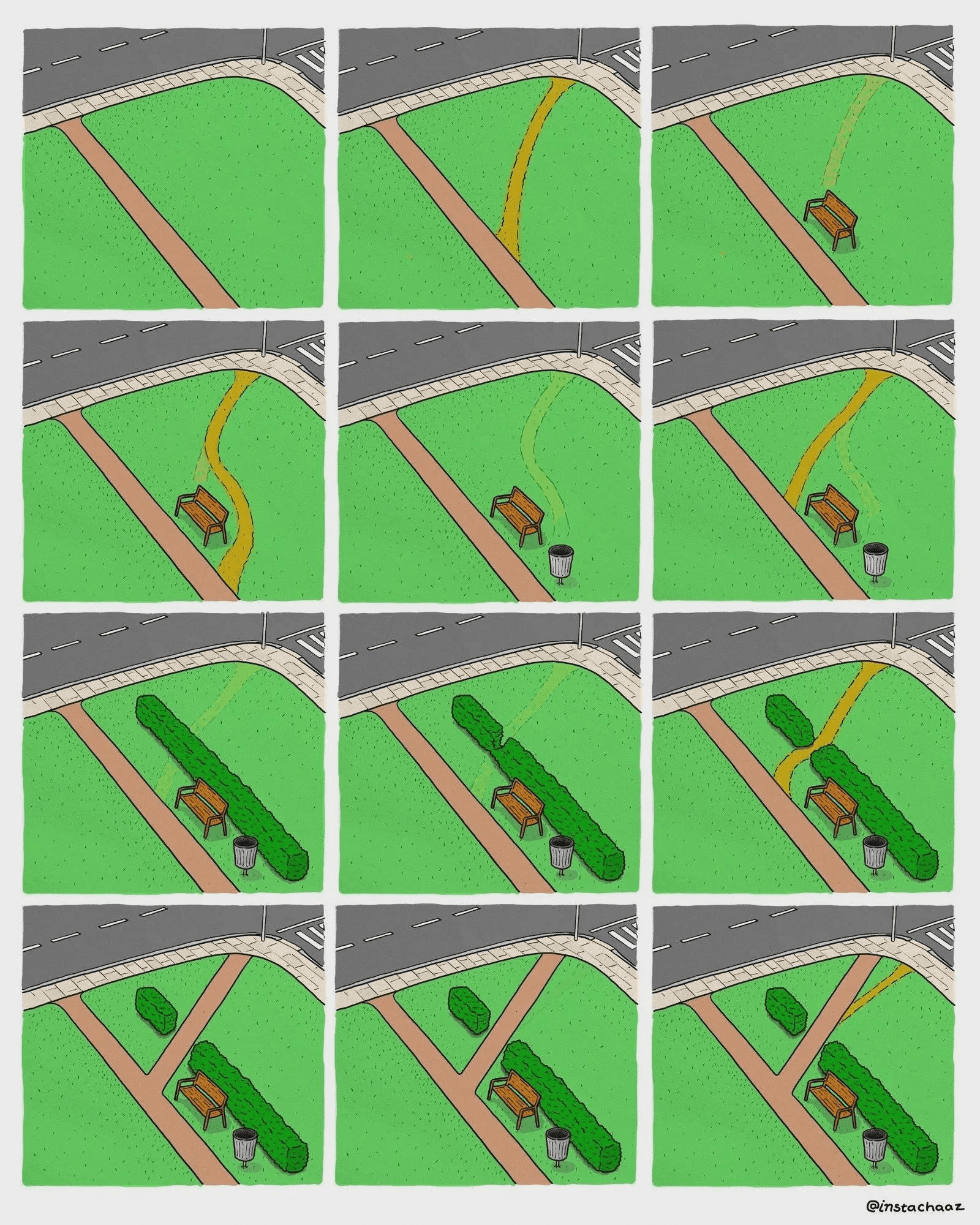
Once the dust had settled around my experience, I remembered I had saved an image on my phone months ago that became the inspiration for this article (I have attached it below by @instachaaz). It explains visually that when the designed rules or pathways are inefficient, humans simply make their own. Urban planners call these “desire paths,” and NN/g backs this up in their work on mental models and wayfinding. Road rules that we respect in the real world suddenly stop applying, and the carefully designed traffic flow of the car park collapses into a standstill at the shopping-centre doors. Why? Because the most “effective” strategy becomes tailing shoppers back to their cars. Of course this is a behaviour no architect intended, yet everyone ends up doing. When the official path fails, the desired path wins.
Erasure of Trust:
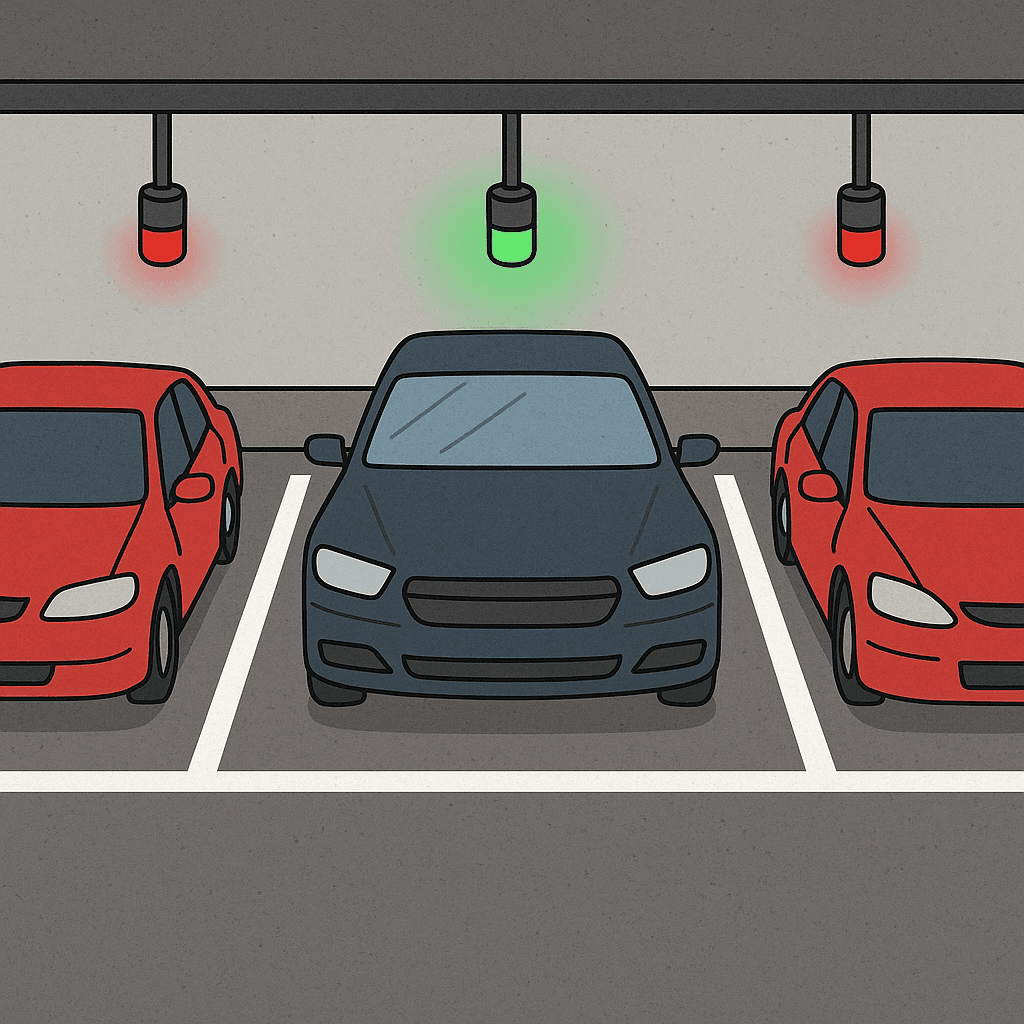
Do you even notice the red light / green light system anymore? That is the “genius” availability signal that hangs above each car spot. What was a well intended improvement to this dreaded experience now simply adds to the chaos. I have had my faith destroyed by a false green light so many times now that I don’t even notice them. And even if they are working… I only have about 36 cars, and 3 rows between myself and the ‘spot’ that there’s absolutely no point in getting my hopes up. According to Nielson Norman Group, inconsistent or inaccurate system feedback is one of the fastest ways to erode user trust. When a system becomes unpredictable, people simply stop paying attention to it and switch to their own strategies instead.
Game Theory:
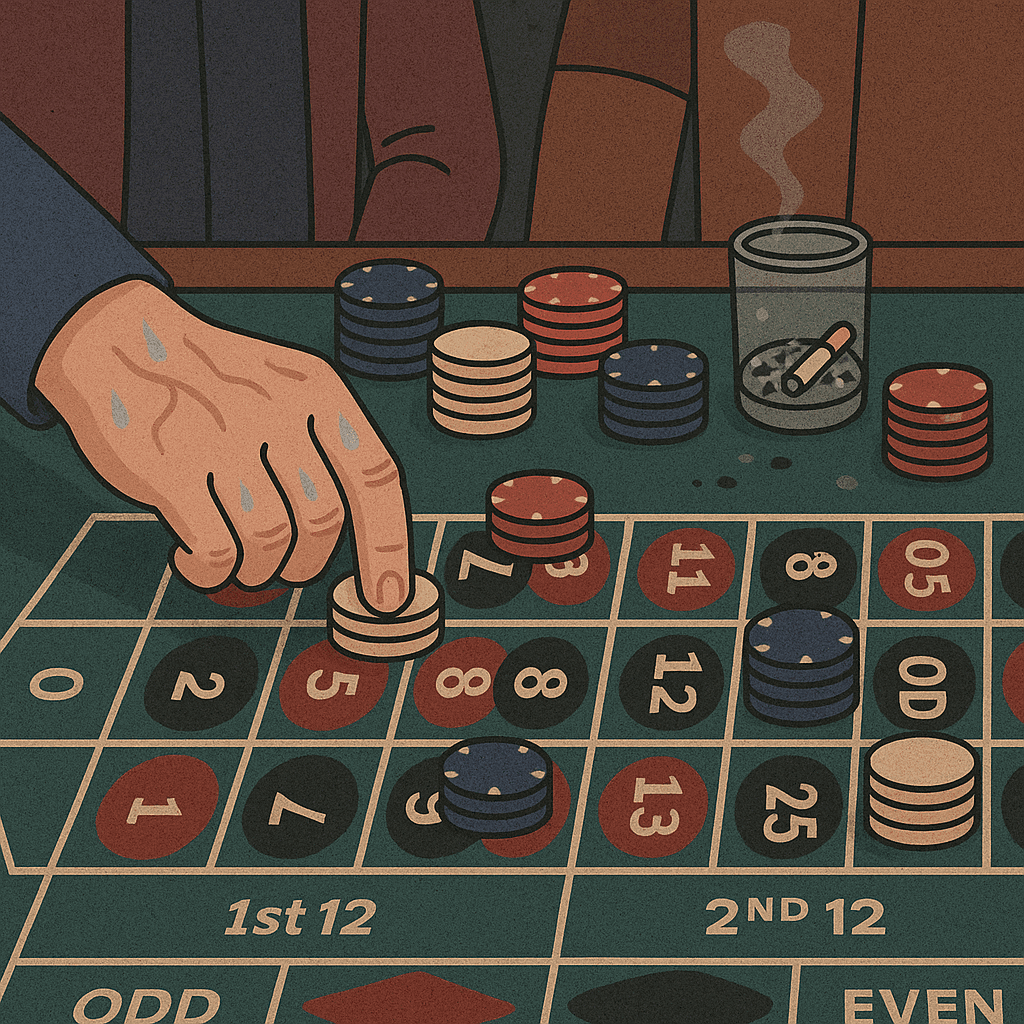
If everyone followed the lanes, and waited their turn the whole system would run smoothly. But the environment doesn’t reward cooperation. In game-theory terms, the payoff for breaking the rules is higher than the payoff for following them, and NN/g reminds us that users reliably choose whatever option gets them to their goal fastest. Once a few people defect, the incentives shift for everyone else.
Who wins and who loses in this game?
At first glance, it might look like Chadstone wins. The car park is packed, the crowds are huge, and clearly people are still coming. But inefficiency hides its costs. Some shoppers avoid Chadstone altogether and head to Southland or anywhere else that doesn’t require such an intense battle. That’s the obvious loss. But the quieter losses happen inside the centre. When people spend 20 minutes circling for a spot, they walk in more stressed, more pressed for time, and mentally exhausted. That’s one or two shops less to wander into. They’re beelining to the one store they came for and getting out.
A well thought-out UX is always the intersection of user needs and business needs. When a user finds it tough to navigate your website, your app, or simply your store, those inefficiencies eventually catch up with the business. Carts aren’t checked out, CTAs are missed and people simply just bounce.
So, you’re a designer. How do you fix this?
The honest answer? I don’t know. And as I'm writing this I think that’s kind of the point. Good design doesn’t start with jumping to solutions. It starts with understanding problems. The people who, for example, designed the green-light sensor system made an educated guess that this would help, and the result is what we have now, a system that doesn’t reflect real human behaviour.
If we were to start exploring solutions, maybe we stop treating parking like a free-for-all and start treating it like the deli counter. Take a number. See where you are in the queue. Get directions to your spot. Everyone’s happy.
Is that the right solution? Maybe. Maybe not.
Anyways… I’m off to Chaddy. Got a few errands to run xx
References & Further Reading
Nielsen Norman Group. Minimize Cognitive Load to Maximize Usability. Link
Nielsen Norman Group. Mental Models. Link
Nielsen Norman Group. Information Scent: How Users Decide Where to Go Next. Link
Nielsen Norman Group. Maintain Consistency and Adhere to Standards (Usability Heuristic #4). Link
Nielsen Norman Group. Working Memory and External Memory. Link
Thaler, Richard & Sunstein, Cass. Nudge: Improving Decisions About Health, Wealth, and Happiness.
@instachaaz. Desire paths illustration. Instagram, 2024. Link