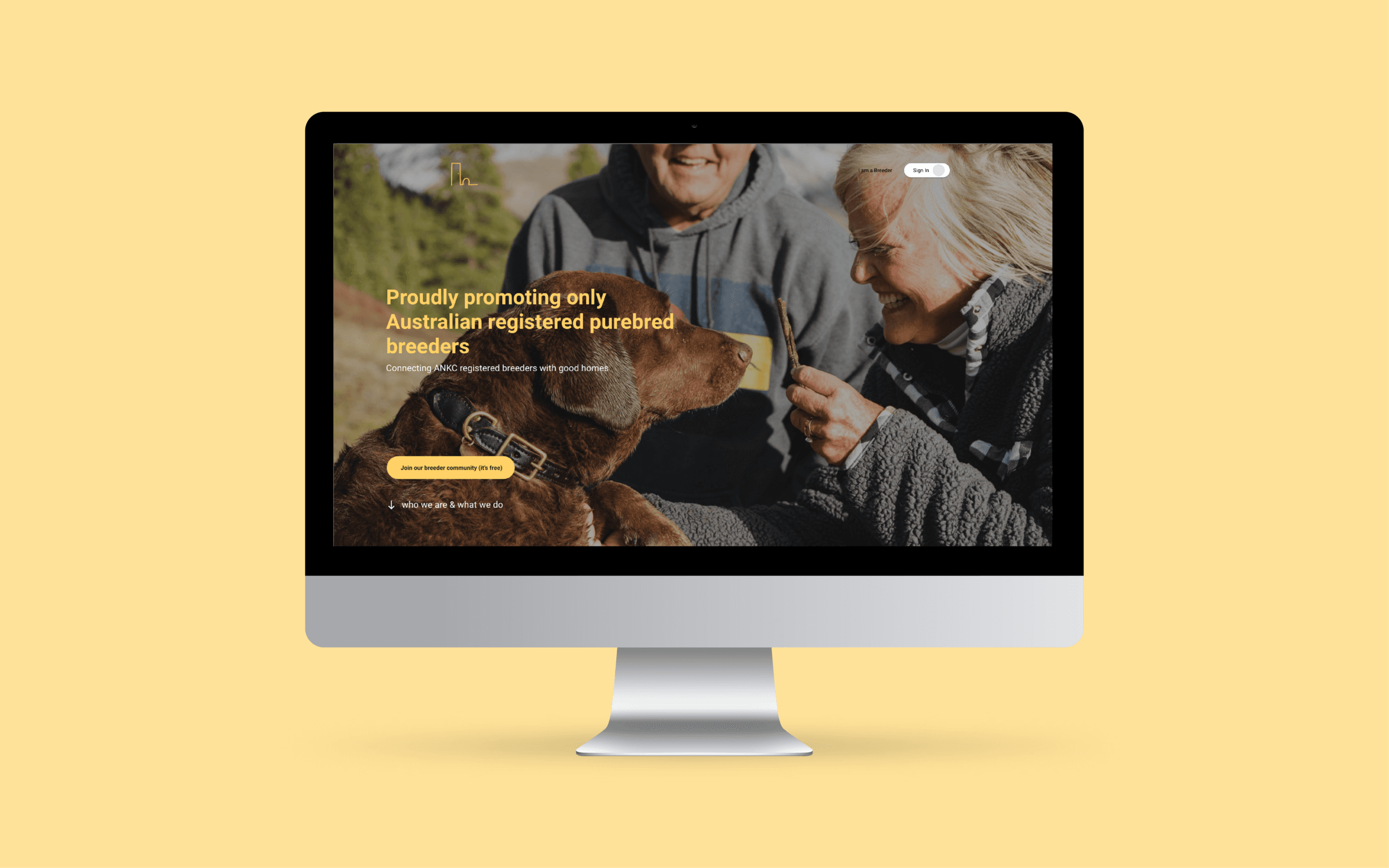
Making dog breeding more transparent and community-focused.
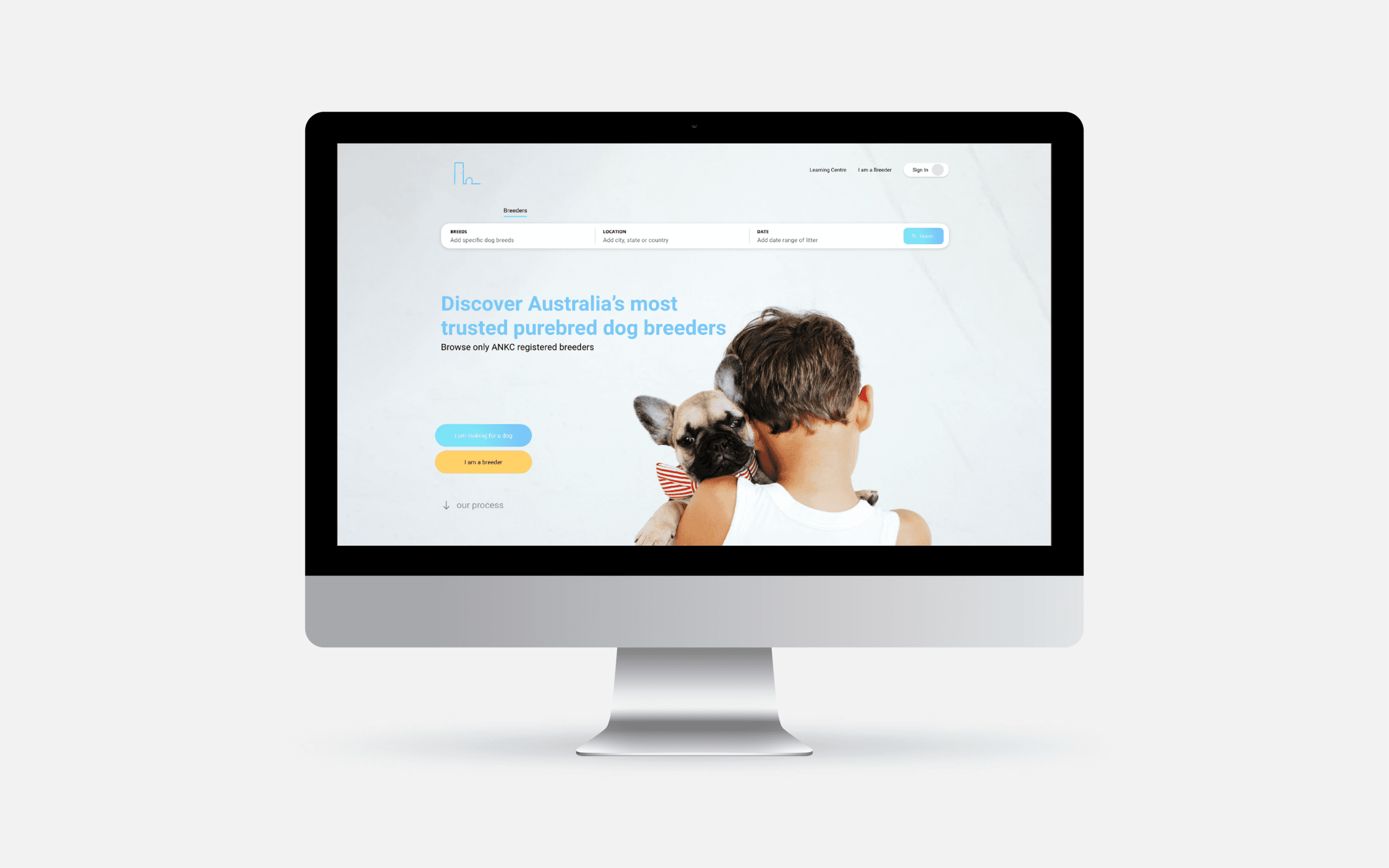
Founder & Product Designer
DoggyDoor was a two-sided marketplace that aimed to make buying a puppy in Australia more transparent, safe, and community-driven. The idea emerged from my own frustrating experience trying to find a breeder. I led the design process from initial research through to brand identity, product development, and launch. Along the way, I interviewed breeders and buyers, uncovered key mismatches in trust and communication, and iterated the platform's UX to reflect the values of both sides of the market.
What was the problem?
It started in 2018 when I was looking for a dog for my family. I didn't know where to go, which breeders to trust, or how to navigate the process, it felt like the wild west. When a mutual friend connected me with a registered breeder, Jo, I began to understand what responsible breeders actually cared about.
Through interviews with Jo and other ANKC registered breeders across Victoria, I started to see the complexity of the ecosystem. I also began sketching early concepts and created personas and journey maps for both buyers and breeders. That process revealed clear tensions between buyer expectations and breeder values, and shaped how we framed the platform.
What we learned
As I spent more time with breeders, it became clear that the platform needed to be more than just a marketplace, it needed to uphold and reflect the values of the ANKC community. Four key principles emerged:
Promoting purebred dogs & the ANKC
Breeders were passionate about their breed and fiercely loyal to the standards of the ANKC. They didn’t want to be lumped in with other registries or cross-breeds. They wanted a platform that reflected their legitimacy and protected the integrity of their work.
Education of the wider community
Many breeders would rather not sell a puppy than send it to someone unprepared. They wanted to see buyers invest in learning about the specific needs, traits, and challenges of the breed before making a decision.
Finding suitable homes
This wasn’t a business to most, it was a passion. Breeders wanted their dogs to go to homes where they’d thrive, with people who genuinely understood and respected the breed.
Control
Breeders had decades of experience and existing ways of doing things. Anything that felt like it was taking control away from them, even in subtle UX interactions, was met with resistance. They wanted to maintain autonomy over who they spoke to, how they evaluated buyers, and how their listings were presented.
These insights forced a fundamental pivot in our design approach: from a platform that streamlined sales to one that built trust and respected control.
What we did
A major breakthrough came in the form of our Learner Modules, an education system designed to align with what breeders valued most: informed buyers.
We built a framework that allowed buyers to complete short, breed-specific learning modules. Once completed, they’d earn badges that were displayed on their profile and surfaced within the search experience itself. This meant buyers could actively demonstrate their commitment to a breed, and breeders could quickly see which buyers had invested in learning.
We leant on conceptual mapping principles, using badges and visual cues to build intuitive associations between trust, effort, and credibility. It was designed to nudge buyers into action while reinforcing breeder values.
We used Sharetribe to test and deploy our MVP, customising the UX to emphasise clarity, trust, and community. From brand tone to interface design, everything was intentionally softened to reflect the care and nuance of the breeder space.
Our impact
DoggyDoor launched in 2020 and gained early traction with a small but passionate community of breeders and buyers. Key outcomes included:
A meaningful uptake in Learner Module completion, driven by the visibility of badges in the buyer search flow.
Improved trust and response rates from breeders, particularly those who had previously been sceptical of online platforms.
A clearer, calmer user experience that reinforced the platform’s values and helped align both sides of the marketplace.
I led the project across UX research, product design, visual identity, and go-to-market strategy. The experience fundamentally shaped how I think about product-market fit, trust-centred UX, and designing with, not just for, communities.